Rug Binding & Serging.
The edges of a rug are where damage starts. Binding and serging restore frayed edges and prevent further unraveling.
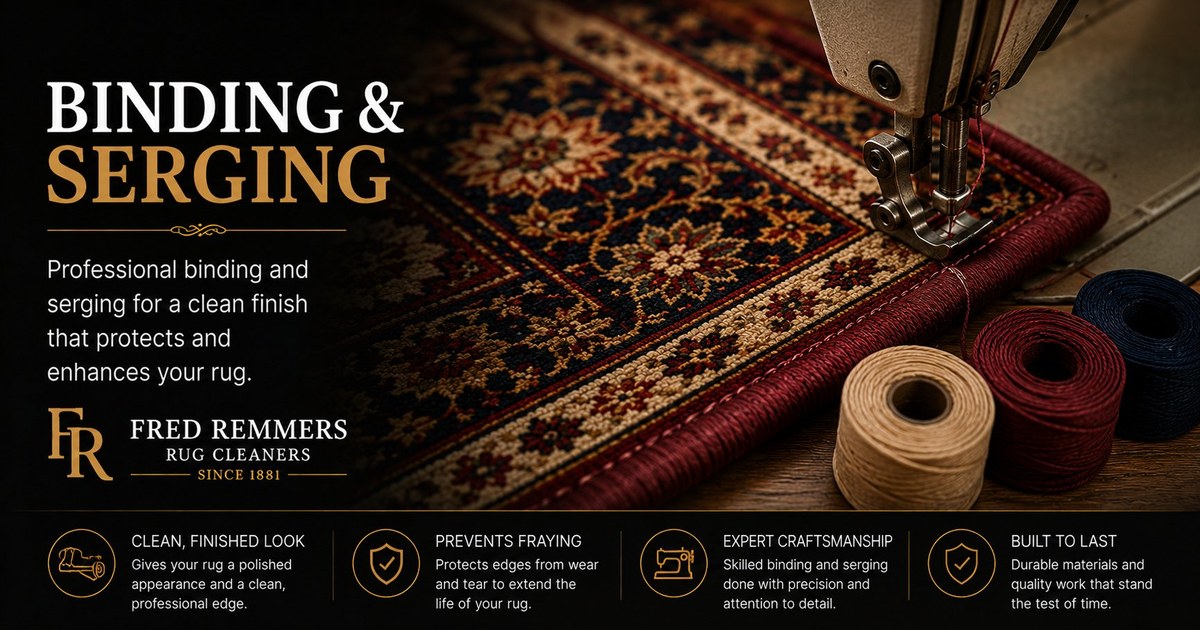
Binding
Cloth tape sewn over the edge of a rug. Used for machine-made rugs and some hand-knotted rugs where the original edge has worn through. Fast, durable, and inexpensive.
Serging
Overcasting yarn applied along the edge by hand or machine. The traditional finish for hand-knotted oriental rugs. Matches the look of the original construction.
Which is right
Depends on the rug. We choose based on construction, age, and how the rug is used. The goal is always the right finish for the rug, not the cheapest one.
When your rug needs binding or serging.
The edge of any area rug takes more wear than the body. Vacuums catch on the trim, foot traffic stresses the perimeter, and pets pull at loose stitches. Once binding starts to fail, deterioration accelerates quickly — what was a small unraveling section becomes inches of exposed foundation in a few months.
We offer three approaches matched to the rug's construction. Cotton machine binding is the most common — durable and discreet, ideal for modern hand-tufted, machine-made wool, and synthetic area rugs. Hand overcasting uses traditional needlework with matched wool to rebuild the edge of hand-knotted oriental rugs; it's invisible from a normal viewing distance and structurally stronger than machine binding. Serging is a tighter, more decorative finish often used on smaller or older pieces where the binding itself is part of the rug's character.
The decision depends on the rug's construction, age, and how it will be used. We recommend hand overcasting for any hand-knotted oriental piece with collector or appraisal value, and machine binding for everything else. We give honest assessments during the estimate — never recommending the more expensive option unless it's the right one for the rug.
Most binding and serging work runs $4–$10 per linear foot depending on construction. A typical 8×10 area rug needs about 36 linear feet of edge. Turnaround is two to three weeks from pickup to delivery.
One scenario where edge work is especially common: rugs that previously had wall-to-wall fitted edges (often older fitted oriental rugs that were sized to the room) and have since been moved or trimmed. These rugs typically need full perimeter rebuilding rather than spot repair, since the original edge was eliminated when the rug was cut to size. We handle these projects routinely.
Binding or serging.
Both binding and serging finish a cut or raw edge so it won't fray, and they're the usual choice for broadloom carpet that's been cut down into an area rug, for remnants, and for machine-made rugs whose edges have worn through.
Binding sews a fabric tape — typically cotton or canvas — around the perimeter; it's clean, durable, and comes in widths and colors to suit the rug. Serging wraps the edge in a continuous yarn overstitch for a softer, more finished look closer to a hand edge. We'll recommend whichever fits the rug's construction, use, and the look you want.
- Cotton or canvas binding tape in a range of widths and colors
- Machine or hand serging in color-matched yarn
- Ideal for cut-down broadloom, remnants, and worn machine-made rugs
- Edge finished to lie flat and resist future fraying
Common questions about edge finishing.
Binding or serging — which is right for my rug?
Can you turn a carpet remnant into a finished area rug?
Will the finished edge lie flat?
Part of our rug repair service. Related: Rug Repair, Overcasting & Stitching, and Rug Patching.
Available across five metros.
Free pick-up and delivery in every city we serve. Tap a city for local details and your nearest phone number.