What actually happens when we wash your rug
When you hand off a rug for cleaning, it disappears for about a week and comes back transformed — but what happens in between? Here is the full behind-the-scenes walkthrough of a proper rug wash, step by step, and why each stage matters for a wool or oriental rug.
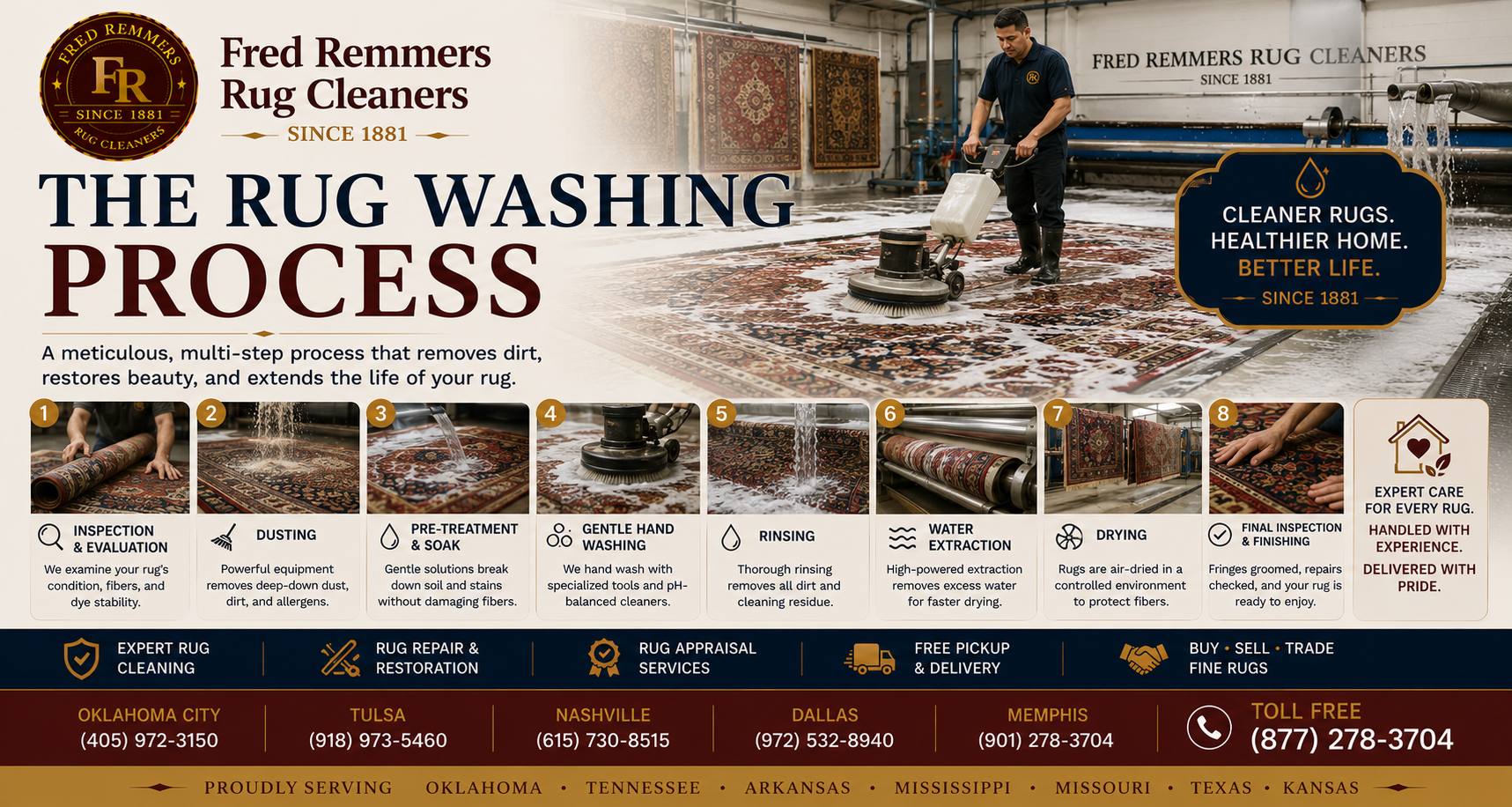
Quick answer: A proper rug wash is a multi-day, hand-finished process at a dedicated plant, not a same-day in-home service. Your rug is inspected and colorfast-tested, dusted to shake out pounds of dry soil, given a full immersion wash with rug-safe cleaners, thoroughly rinsed, dried under controlled conditions, then groomed and inspected before delivery. Each step exists to clean deeply and protect the wool and dyes.
Key takeaways
- Rug washing is immersion at a plant, not surface carpet cleaning in your home.
- Dusting removes pounds of dry grit first — the step DIY and carpet cleaning skip.
- Colorfast testing and controlled drying are what keep wool from shrinking or bleeding.
- The whole process takes about a week, and we are honest that not every stain comes out.
First, why rug washing is not carpet cleaning
The most important thing to understand is that a wool or oriental rug is not wall-to-wall carpet, and it is not cleaned the same way. Carpet cleaning is a surface process performed in your home, usually with a machine that treats the top of the fibers and extracts what it can. A proper rug wash is a full immersion process performed at a dedicated plant, where the rug is dusted, washed all the way through, rinsed, and dried under controlled conditions. The difference matters because most of the soil in a rug is not on the surface — it is packed down near the foundation, where a surface machine cannot reach.
It also matters for safety. A rug on your living-room floor cannot be over-wet without risking the floor, browning, and mildew, and it cannot be dried properly. This is why we bring your rug back to our plant rather than treat it in place — and why the multi-day, hand-finished approach is the real thing, as we explain in rug cleaners vs. carpet cleaners and why steam cleaning damages wool rugs. Here is what those days actually involve.
Step 1: Inspection and colorfast testing
Every rug starts with a careful look. Before anything touches it, we examine the rug’s fibers, construction, dyes, and condition, and note any stains, pet-urine areas, weak spots, moth damage, or existing repairs. Two things come out of this:
- A colorfast test. We test the dyes to confirm the colors are stable in water. If a rug’s dyes are prone to running, we adjust the method to protect them — the safeguard against the dreaded color run.
- An honest expectation. We tell you up front what should come out and what might not, because some things — old urine damage, sun-fading, bleach spots — can be permanent. We would rather set a realistic expectation than promise a miracle.
This is also the stage where questions get answered, which is exactly what our guide to questions to ask a rug cleaner encourages you to raise.
Step 2: Dusting out the dry soil
Before a drop of water is used, the rug is dusted — gently agitated so the dry sand and grit buried in the pile and foundation fall out. This step surprises people: a single room-sized wool rug can hold several pounds of dry soil you would never see on the surface, and that grit is abrasive, quietly sawing at the fibers with every footstep. Removing it while it is dry is what makes the wash that follows actually effective — try to wash a soil-laden rug without dusting first and you just turn the grit into mud.
Textile care authorities treat dry-soil removal as the foundation of caring for any textile; the George Washington University Textile Museum’s guidance on caring for textiles puts gentle dust removal first for exactly this reason. It is also the single step that home cleaning and carpet machines skip entirely — we go deeper into it in how much dust is hiding in your rug.
Step 3: The immersion wash and rinse
Now the rug is washed. Using water and gentle, rug-appropriate cleaning agents chosen for the rug’s fibers and dyes, the pile is worked through by hand so the wash reaches all the way to the foundation — not just the tips of the pile. The wash lifts out the remaining soil, body oils, and many stains that the dusting could not.
Just as important as the wash is the rinse. The rug is rinsed thoroughly so that no cleaning residue is left behind — and leftover detergent is a real problem, because it stays tacky and pulls dirt back in, making a rug re-soil quickly. This water-based immersion method is how oriental rugs have been cleaned for centuries, and it is the reason a proper wash leaves a rug genuinely clean rather than just freshened on top. Pet-urine cases get extra attention here, since urine bonds into the fibers and needs specific treatment beyond a normal wash.
Step 4: Controlled drying, then grooming and finishing
Drying is where many DIY and in-home attempts go wrong, and where a plant earns its keep. The washed rug is dried flat or hung in a controlled, well-ventilated space — never in direct sun or high heat. The reason is physical: research from The Woolmark Company notes that wool fibers can absorb around a third of their own weight in moisture before they even feel wet, so a rug holds far more water than it appears to. Rush the drying and you invite mildew, odor, browning, and shrinkage; do it under control and the wool comes back sound. (The same principle is why we wrote how to dry a wet rug for emergencies at home.)
Once dry, the rug is groomed and finished: the pile is brushed back into its natural direction, the fringes are cleaned and tidied, and the whole rug gets a final inspection. This is also the natural moment for any repairs — fringe, binding, or reweaving — or optional extras like a deodorizing treatment or fabric protector, since the rug is already clean and on the bench. Anything beyond the basic wash is quoted before we do it.
How long it takes, and what to expect
Because dusting, washing, rinsing, and above all drying take time, a proper wash is a multi-day process — typically about a week from pick-up to delivery, longer for heavy soiling, pet-urine treatment, or repairs. Anyone promising a same-day, in-home “deep clean” of a wool rug is describing carpet cleaning, not rug washing. Most household rugs benefit from this full wash every one to three years, as we cover in how often to clean an oriental rug, and you can see what goes into the price in how much rug cleaning costs.
Fred Remmers has hand-washed oriental rugs this way since 1881, with free pick-up and delivery across all five metros we serve — so you never haul a heavy rug yourself. When your rug is due, schedule a free pick-up or get a free estimate, see the full rug cleaning service, and keep it fresh between washes with our rug maintenance tips.
Common questions about the rug washing process.
How do professionals wash an oriental rug?
A rug goes through several stages: inspection and colorfast testing, dusting to shake out dry soil, a full immersion wash with water and gentle rug-safe cleaners, a thorough rinse, controlled drying, and grooming and finishing. The whole process is done by hand at a dedicated rug plant and usually takes about a week, which is what makes it safe and thorough.
Is rug washing the same as carpet cleaning?
No. Carpet cleaning is a surface process done in your home, usually with a machine that treats the top of the fibers. Rug washing is a full immersion process at a plant, where the rug is dusted, washed through, rinsed, and dried under controlled conditions. Wool and oriental rugs need the immersion process; surface cleaning cannot reach the soil deep in the pile.
What is rug dusting?
Dusting is the dry first stage where the rug is gently agitated so packed-in sand and grit fall out of the pile and foundation before any water is used. A single rug can hold several pounds of dry soil, and removing it first is what makes the following wash effective. It is a step that home and carpet cleaning skip entirely.
Why can’t you clean my rug in my home?
A proper wash needs space, water, controlled drying, and time that a home visit cannot provide. In-home cleaning cannot dust out the deep dry soil, fully rinse the rug, or dry it under controlled conditions, and over-wetting a rug on your floor risks the floor, browning, and mildew. That is why we bring the rug back to our plant.
How long does professional rug cleaning take?
Most rugs take about a week from pick-up to delivery. Heavily soiled rugs, pet-urine treatments, and any needed repairs take longer. The controlled drying stage alone takes time, and rushing it is exactly what causes damage, so a proper wash is never a same-day service.
Do you use water to wash the rug?
Yes. After dusting, the rug is washed with water and gentle, rug-appropriate cleaning agents chosen for its fibers and dyes, then thoroughly rinsed so no residue is left behind. Water-based immersion washing is how oriental rugs have been cleaned for centuries, and it is far more thorough than a dry surface treatment.
Will washing shrink or damage my wool rug?
Not when it is done correctly. The risks — shrinking, dye bleed, browning — come from the wrong water temperature, harsh chemicals, or improper drying, which is exactly what a professional process is designed to avoid. We pre-test for colorfastness, use appropriate cleaners, and dry under controlled conditions to protect the rug.
Do you test for colorfastness before washing?
Yes, always. During inspection we test the dyes on each rug to make sure the colors are stable before full washing. If a rug’s dyes are prone to running, we adjust the method accordingly. This pre-testing is one of the biggest differences between a professional wash and a risky DIY or carpet-cleaner attempt.
How is the rug dried?
The rug is dried flat or hung in a controlled, well-ventilated drying area, never in direct sun or high heat. Wool can hold a great deal of moisture, so controlled drying prevents mildew, odor, browning, and shrinkage. Proper drying is one of the most important and time-consuming stages of the whole process.
Will all the stains come out?
Most soil and many stains come out, but we are honest that not everything can be removed. Some stains — certain dyes, old pet-urine damage, sun-fading, or bleach spots — may be permanent. We inspect the rug first and tell you what to realistically expect before any work begins, rather than promising a miracle.
Can you repair or protect the rug during cleaning?
Yes. Cleaning is the ideal time to address repairs like fringe, binding, or reweaving, since the rug is already at the plant and freshly washed. We can also apply a fabric protector or deodorizing treatment if you want one. Any repairs or add-ons are quoted before we proceed.
Do you pick up and deliver?
Yes. We offer free pick-up and delivery across all five metros we serve, so you never have to haul a heavy rug yourself. We collect the rug, take it to our plant for the full process, and return it clean and dry to your door.
Keep reading.
Rug cleaners vs. carpet cleaners: the difference
Why a wool rug needs a plant wash, not the truck-mounted machine that cleans your carpet.
How much dust is hiding in your rug?
A single rug can hold pounds of dry grit — and why dusting has to come before any wash.