Do you really need a rug pad?
A good rug pad does far more than stop slipping — it protects the rug from wear, shields your floor, cuts noise, and makes the rug feel better underfoot. Here is what a pad actually does, which type to choose, and when you truly need one.
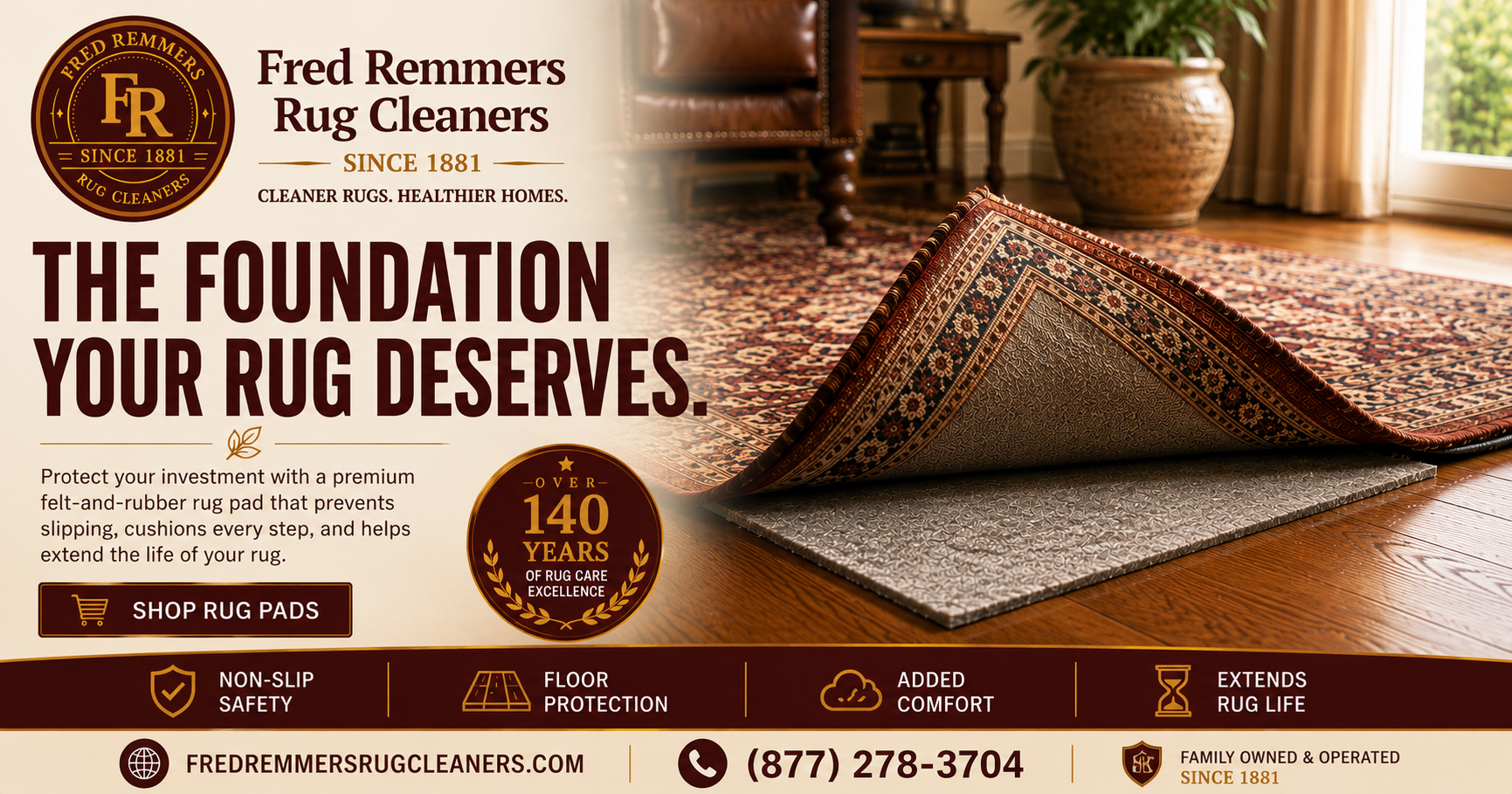
Quick answer: For nearly every rug, yes — a pad protects the rug from wear, protects the floor underneath, stops the rug from slipping, cuts noise, and makes it feel better underfoot. The benefit is largest on hard floors and in high-traffic areas. The best all-around choice is a natural felt-and-rubber pad; avoid cheap PVC or adhesive-backed pads, which can mark a wood finish.
Key takeaways
- A pad protects both the rug and the floor and prevents slips and trips.
- It extends a rug’s life by absorbing foot-traffic crush and stopping grit from grinding the foundation.
- Natural felt-and-rubber suits most situations; avoid cheap PVC and adhesive-backed pads on hardwood.
- Size the pad about one inch smaller than the rug on every side.
Do you really need a rug pad?
For almost every rug, the honest answer is yes. A pad is the least expensive thing you can buy for a rug, and it quietly does more to extend the rug’s life than almost anything else short of regular cleaning. The benefit is biggest on hard floors — hardwood, tile, laminate, vinyl — and in rooms with real foot traffic, but even a rug on carpet benefits from a thin pad that keeps it from creeping and rippling.
The rare cases where you can skip it: a very large rug held flat by heavy furniture on every edge, or a rug that is already attached to a built-in pad. Otherwise, a bare rug is wearing out faster and sliding more than it needs to.
What a rug pad actually does
A good pad earns its keep in five separate ways:
- Protects the rug from wear — the pad acts as a shock absorber, cushioning each footstep so the pile and foundation are not crushed against a hard floor. It also lifts the rug slightly so grit falls through to the floor instead of grinding against the knots.
- Protects your floor — it stops a rough rug backing and trapped grit from scratching hardwood, and the right material prevents color transfer or marking of the finish.
- Stops slipping — a gripping pad keeps the rug in place, preventing the bunching and sliding that cause trips and falls, which matters most with smaller rugs and runners.
- Reduces noise — the extra layer dampens footsteps and echo, noticeably so in rooms with hard floors and high ceilings.
- Feels better and vacuums better — the rug is softer underfoot, and the cushion lets a vacuum lift dirt more effectively instead of pushing the rug around.
The wear protection is the one most owners underrate. Grit and foot pressure are what slowly destroy a rug’s foundation; a pad reduces both, which is why a padded rug can last roughly twice as long as the same rug used bare.
The main types of pad
Most pads are one of three constructions:
- Felt (cushion only) — dense pressed fiber that gives the most cushioning and wear protection. Best under large rugs that are already held in place by furniture, where grip matters less than padding.
- Natural rubber (grip only) — a thin pad that grips hard floors well and resists slipping. Good for low-pile rugs and runners where you want the rug to lie flat and stay put.
- Felt-and-rubber (cushion + grip) — the best of both and the right choice for most homes: felt on top for protection, natural rubber on the bottom for grip. It works on nearly every floor and rug combination.
Wherever possible, choose natural rubber rather than synthetic PVC. Natural rubber grips without the plasticizers and adhesives that cause floor problems over time.
Choosing by floor type
- Hardwood, laminate, vinyl — a natural felt-and-rubber pad. Avoid anything with PVC or adhesive backing, which can discolor or stick to the finish.
- Tile and stone — felt-and-rubber as well; the extra cushion is welcome on a hard, cold surface.
- Wall-to-wall carpet — a thin, firm pad (often a low-profile rubberized or needle-punch type) keeps a rug from wrinkling and walking across the carpet underneath.
Pads to avoid
Not every pad is a friend to your floor. Steer clear of:
- Cheap PVC or plastic waffle pads — they break down, turn brittle, and can leave a sticky residue or yellow stain on hardwood, especially in warm or humid conditions.
- Adhesive-backed pads — anything designed to stick to the floor can pull up or react with a wood finish.
- Thin foam that crumbles — once it disintegrates it offers no protection and the crumbs themselves can mark the floor.
If a pad is suspiciously cheap and feels like plastic, it usually is — and replacing a damaged floor finish costs far more than a quality pad.
Sizing and placement
A pad should sit about one inch in from the rug’s edge on all sides, so it stays completely hidden and the rug’s border can still lie flush with the floor. Pads cut easily with heavy scissors or a utility knife, so buy the next size up and trim it to your rug exactly. Lay the pad rubber-side down, center the rug over it, and smooth the rug from the middle outward. Not sure the rug itself is the right size for the room? Our rug size guide covers what size to buy for every room.
Not sure what you need?
If you are weighing a pad for a valuable or hand-knotted rug, it is worth getting it right — the wrong pad can do more harm than none at all. We supply and fit the correct rug pads for every floor and rug type, and we can advise on the right pad whenever we clean or deliver a rug. When you are ready, schedule a free pick-up — pick-up and delivery are free across all five metros we serve. A pad also pairs naturally with good habits like rotating rugs and keeping them clean; see how often you should clean an oriental rug.
Common questions about rug pads.
Do I really need a rug pad?
For nearly every rug, yes. A pad protects the rug from premature wear, protects the floor underneath, keeps the rug from slipping, reduces noise, and makes the rug feel better underfoot. The benefit is largest on hard floors and in high-traffic areas.
What kind of rug pad is best for hardwood floors?
A natural felt-and-rubber pad is the best all-around choice for hardwood. The felt cushions and protects the rug while the natural rubber grips the floor without the chemicals found in cheap PVC pads, which can discolor or react with floor finishes over time.
Can a rug pad damage hardwood floors?
A good natural felt or natural-rubber pad will not. Inexpensive PVC, plastic, or adhesive-backed pads can stick to a floor finish, leave residue, or discolor the wood, especially in warm or humid conditions. Choose natural materials and avoid anything with an adhesive backing.
What size rug pad do I need?
A pad should be about one inch smaller than the rug on all sides, so it stays hidden under the edges. Pads are easy to cut down with scissors or a utility knife to fit a rug exactly.
Do rug pads stop a rug from slipping?
Yes. A rubber-backed or felt-and-rubber pad grips both the floor and the rug, which keeps the rug in place and prevents the bunching and sliding that cause trips and falls, especially with smaller rugs and runners.
Are rug pads worth it for valuable or antique rugs?
Especially so. A pad absorbs foot-traffic crush and stops grit from grinding against the foundation, both of which shorten a rug’s life. For a hand-knotted or antique rug, a quality pad is inexpensive insurance against expensive wear.
How long does a rug pad last?
A quality felt-and-rubber pad typically lasts seven to ten years or more. Cheap foam pads break down much faster, crumbling or going hard within a couple of years, which is when they are most likely to mark a floor.
Keep reading.
How often should you clean an oriental rug?
Most rugs need professional cleaning every 1–3 years — and a pad helps them stay clean longer.
How to spot moth damage in wool rugs
Carpet moths eat wool from the back first. The early signs and how to stop them before they spread.