How to remove candle wax or gum from a rug
Wax and gum are not liquid stains, so the usual blot-and-dilute rules do not apply. The trick is the opposite: harden the mess with ice, flake it off, then gently wick away the rest. Here is the safe way to do it on a wool or oriental rug — and what to avoid.
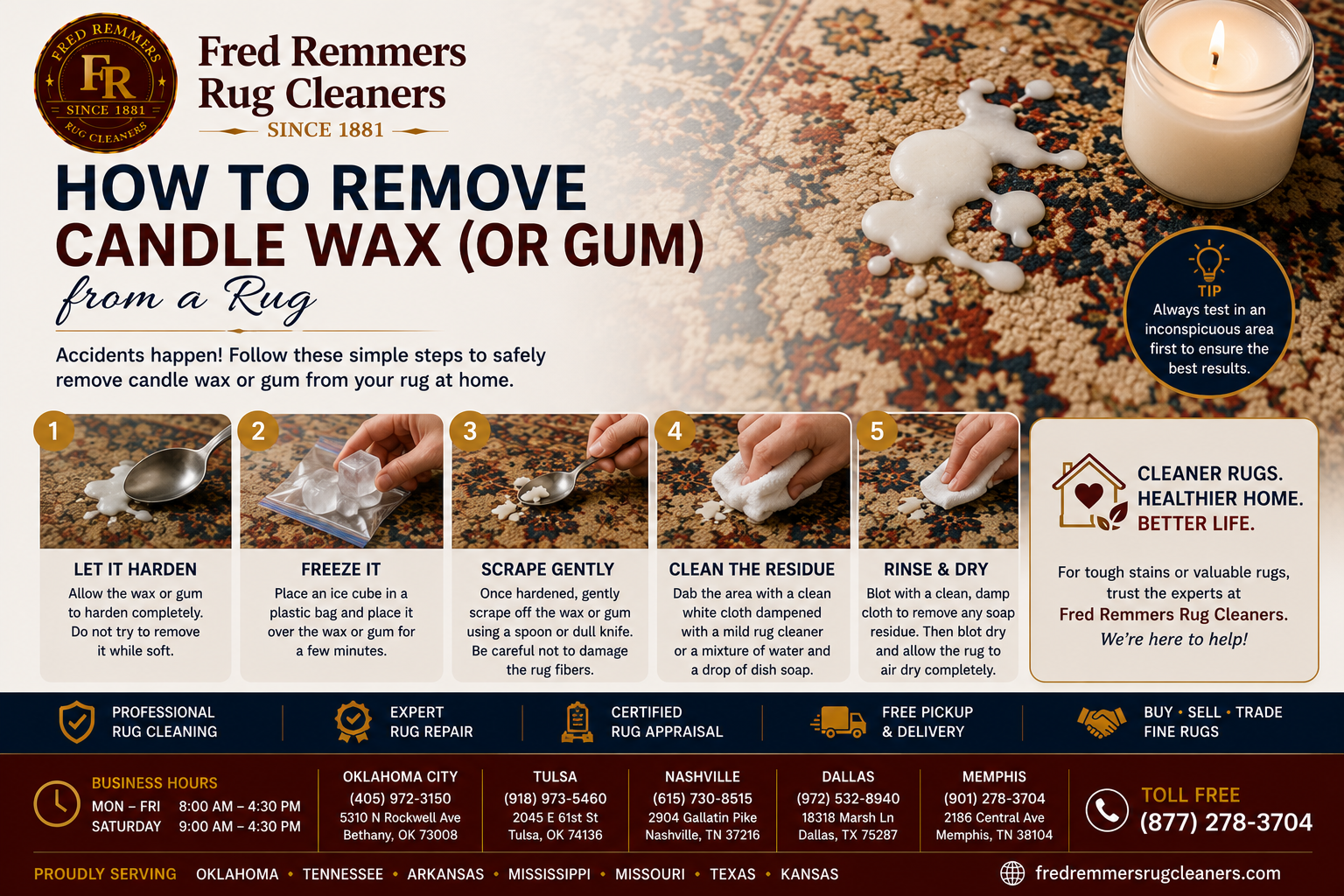
Quick answer: Do not scrub or heat it first. Harden the wax or gum by pressing a bag of ice over it for about 10 minutes, then flake it off with a dull spoon or butter knife — never a sharp blade. For wax left in the pile, lay plain paper over the spot and press with a warm (not hot) iron so the wax wicks up into the paper. Pretest any solvent on a hidden corner, and for antique or silk rugs, let a professional finish.
Key takeaways
- Harden first, don’t soften — ice makes wax and gum brittle so they flake off cleanly.
- Flake with a dull tool, never a sharp blade that can cut wool pile.
- Wick leftover wax with a warm iron through paper — low heat, brief passes.
- Colored wax can leave a dye tint; pretest any solvent, and call a pro for valuable rugs.
Why wax and gum need a different approach
Most rug spills are liquids you race to blot up before they soak in. Candle wax and chewing gum are the opposite problem: they are solids that cling to the fibers, and the instinct to rub, pull, or heat them off is exactly what drives them deeper and spreads the mess. Wax that is warm and soft smears; gum that you tug stretches into long strands and works further into the pile.
The counterintuitive fix is to make the mess harder, not softer. Chilled until brittle, both wax and gum lose their grip and flake off in pieces. That single principle — harden, then flake — is the heart of every step below, and it is safe on almost any rug, including a genuine hand-knotted wool rug. The finishing steps that use heat or solvent need more care, which we will flag as we go.
Removing candle wax, step by step
Work in this order and most wax spills come out cleanly:
- Let it set, then chill it. If the wax is still liquid, let it cool and harden on its own — do not wipe it. Then press a bag of ice (or an ice pack) over the spot for about 10 minutes to freeze it brittle. Keep the ice sealed in the bag so meltwater does not soak the rug; extra moisture makes wax harder to remove.
- Flake it off. With a dull spoon or butter knife, gently chip and lift the hardened wax. It should break away in pieces. Never use a sharp blade, which can slice wool pile.
- Wick out the rest with warm heat. Lay a plain white paper towel or piece of brown paper over any wax left in the pile, and press with an iron on a low, warm setting. The wax melts and wicks up into the paper. Shift to a clean section of paper and repeat until no more transfers.
- Finish and dry. Let the area air dry and gently work the pile back into place with your fingers.
This ice-then-iron method is the same one recommended by Iowa State University Extension. One important wool caveat: keep the iron warm, never hot, use brief passes, and always keep paper between the iron and the rug — too much heat can scorch or felt wool and can set dye from colored wax. That heat risk is the same reason we warn against hot water and steam on wool in why steam cleaning damages wool rugs. Candles are just one holiday risk; see our holiday rug care guide for tree water, winter salt, and the rest. Crayon is mostly wax too, so the same ice-first approach applies — see how to get crayon, slime, Play-Doh, and marker out of a rug.
Colored wax and the dye it leaves behind
Plain white or ivory wax usually lifts without a trace. Colored and scented candles are trickier, because the dye that tints the wax can stay in the fibers after the wax itself is gone. Once you have removed all the wax you can with the ice-and-iron steps, you can blot a faint color tint with a little rubbing alcohol on a clean white cloth, working from the outside in. Orange and black Halloween candles are common culprits — our Halloween rug care guide covers jack-o’-lanterns and the rest of the season’s hazards.
Two honest cautions here. First, always pretest the alcohol on a hidden corner — a back edge or spot under furniture — because wool dyes can bleed. Second, do not scrub or saturate the area. If the color will not lift with gentle blotting, stop; pushing harder risks spreading a dye stain or bleeding the rug’s own colors, which is a job for our color-run removal service, not a home fix.
Removing chewing gum
Gum follows the very same harden-then-flake logic:
- Freeze it hard. Hold an ice cube in a plastic bag against the gum until it is frozen solid and brittle.
- Scrape gently. Use a dull tool — a butter knife, spoon, or plastic scraper — to lift the brittle gum, being careful not to gouge the pile. It should shatter and pop off rather than stretch.
- Vacuum the bits. Vacuum up the frozen fragments before they warm and re-stick.
- Treat any residue. For a sticky shadow left behind, dab a little mild dish soap in cold water with a cloth and blot — after a colorfastness pretest.
This is the method the University of Georgia Extension recommends for gum: freeze it hard, scrape with a dull tool without gouging, and pretest any cleaner first. The same careful, cold-first approach keeps a sticky accident from turning into a bald patch in the pile.
What never to do on a wool rug
A few tempting shortcuts do real damage to wool and oriental rugs:
- Do not melt wax with a hair dryer — it spreads the wax and drives it deeper. Cold, not heat, is your first move.
- Do not use a sharp knife or razor — it cuts the pile and can sever foundation threads. Only dull tools.
- Do not press a hot iron directly on the rug — always use paper as a barrier and keep the heat low; a hot iron scorches and felts wool.
- Do not pour solvents on freely — rubbing alcohol and cleaners can run wool dyes; apply sparingly and pretest first.
- Do not soak the rug — over-wetting invites browning and mildew, as with any wool spill.
The same blot-and-pretest discipline applies to the liquid spills too — see our guides to red wine and coffee and tea stains, and the general rug spill first-aid steps.
When to call a professional
Some wax and gum situations are best handed to a specialist from the start:
- The rug is antique, silk, or finely hand-knotted, where heat and solvents are risky.
- A large spill or deeply embedded wax has run down into a thick pile or the foundation.
- Colored wax has left a dye stain, or your rug’s own colors start to bleed.
A professional rug plant can flush out embedded wax and gum in a full immersion wash — safely reaching what home methods cannot — and correct dye problems that DIY makes worse. For an ordinary deposit on a sturdy rug, our hand-finished rug cleaning handles it; a fabric protector like Scotchgard also helps future spills release more easily, though in plain honesty it is no force field. When in doubt, schedule a free pick-up — free across all five metros we serve — and keep the rest of our rug maintenance tips handy for whatever the next accident brings.
Common questions about wax & gum on rugs.
How do you get candle wax out of a rug?
Do not scrub it. First harden the wax by pressing a bag of ice over it for about 10 minutes, then chip and flake off the brittle wax with a dull spoon or butter knife. For what remains in the pile, lay a plain paper towel or brown paper over the spot and press with a warm (not hot) iron, so the melting wax wicks up into the paper. Move to a clean section of paper and repeat until no more transfers.
Does freezing candle wax really work?
Yes, freezing is the key first step. When wax is warm and soft it smears deeper into the fibers, but when you harden it with ice it turns brittle and pops off in pieces. Keep the ice in a bag so meltwater does not soak the rug, since moisture makes wax harder to remove.
Can I use an iron to remove wax from a wool rug?
Yes, but carefully. Use the iron on a low, warm setting, always with a plain paper towel or brown paper between the iron and the rug, and keep it moving in brief passes. Too much heat can scorch or felt wool and can set any dye from colored wax. If your rug is antique, silk, or hand-knotted, it is safer to let a professional do the heat step.
How do I remove colored candle wax stains from a rug?
Remove the wax itself first with the ice-and-iron method. Colored wax can leave a dye tint behind, which you can blot gently with a little rubbing alcohol on a cloth. Always pretest the alcohol on a hidden corner first, because wool dyes can bleed. If the color does not lift, stop and have it professionally treated.
How do you get chewing gum out of a rug?
Harden the gum with an ice cube in a plastic bag until it is frozen and brittle, then scrape it away with a dull tool such as a butter knife or spoon, being careful not to gouge the pile. Vacuum up the frozen bits. Any sticky residue left behind can be dabbed with a little mild dish soap solution and blotted, after a colorfastness test.
Will scraping damage my wool rug?
Only if you use the wrong tool. Never use a sharp blade, which can cut the wool pile or foundation. Use a dull spoon, butter knife, or plastic scraper and work gently once the wax or gum is frozen brittle, so it flakes off rather than needing force.
Should I use a hair dryer to melt the wax off?
No. Melting wax with a hair dryer usually spreads it and drives it deeper into the pile, making the problem worse. The correct approach is the opposite: harden the wax with ice first, then flake it off and wick the remainder with a warm iron through paper.
Does rubbing alcohol remove wax residue from a rug?
It can help with the last traces and with color left by dyed wax, applied sparingly by blotting with a cloth. Because solvents can affect wool dyes, always pretest on a hidden area first. It is a finishing touch after the ice-and-iron steps, not a substitute for them.
What if wax has soaked deep into the pile or foundation?
A large spill or wax that has run deep into a thick or hand-knotted rug is hard to fully remove at home. Do the ice-and-flake step to take off what you can, but avoid over-ironing or soaking the rug. Deeply embedded wax is best flushed out in a professional immersion wash.
Can candle wax permanently stain a rug?
The wax itself usually comes out with the ice-and-iron method. The lasting mark, if any, comes from dye in colored wax or from heat setting that dye. Acting carefully with low heat and pretesting any solvent keeps a temporary spill from becoming a permanent stain.
Is it safe to do this on an antique or oriental rug?
The ice-and-flake step is safe on almost any rug. The warm-iron and solvent steps carry more risk on antique, silk, and finely hand-knotted rugs, where heat and chemicals can harm delicate fibers and natural dyes. For valuable pieces, it is wisest to remove the loose wax gently and let a rug specialist finish the job.
When should I call a professional for wax or gum?
Call a professional if the rug is wool, silk, antique, or hand-knotted and the deposit is large or deep, if colored wax has left a dye stain, or if home steps stop making progress. A rug specialist can safely remove embedded wax and gum in a full wash without risking the fibers or dyes.
Keep reading.
How to get red wine out of a wool rug
The dreaded dinner-party spill — and the safe, fast way to lift it before it sets.
How to get coffee & tea stains out of a rug
Why tannin stains leave a tan ring — and how to lift them without setting the color.